

Are you struggling with stubborn belly fat, yo-yo dieting, or gym routines that don’t work? You are not alone. In 2025, weight loss injections, sometimes called fat-burning shots or belly fat injections, have become a leading trend in the health and wellness industry.
So, what are these “slimming injections”? In simple terms, they are medically prescribed shots that help suppress appetite, improve fat metabolism, and regulate insulin. While they are not a quick fix, using them alongside a healthy diet and exercise can significantly speed up results.
Important: All weight loss shots should only be taken under medical supervision. They are not over-the-counter treatments but closely regulated therapies backed by solid research.
In this guide, we will cover:
– The different types of weight loss injections available.
– How these shots work in the body.
– The top injections for weight loss in 2025, including semaglutide, tirzepatide, liraglutide, and more.
– Real-life case studies, pros and cons, and which option may suit you best.
Different Types of Weight Loss Injections
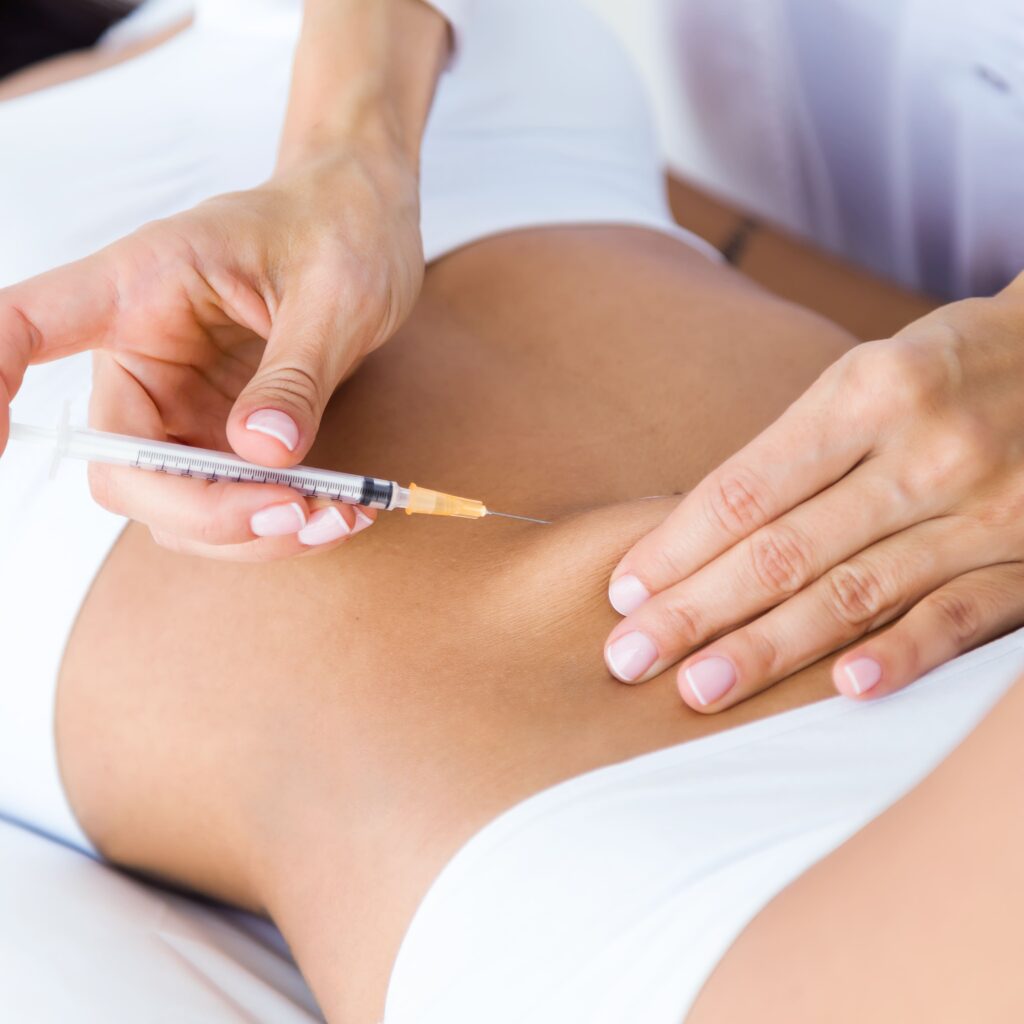
1. GLP-1 Agonists (Semaglutide, Liraglutide)
GLP-1 (glucagon-like peptide-1) agonists are some of the most effective weight loss injections. These include:
Semaglutide (brand names: Ozempic, Wegovy)
Liraglutide (brand name: Saxenda)
How They Work
They mimic natural gut hormones. They slow digestion, helping people feel full longer. They reduce cravings for high-calorie foods. They improve insulin sensitivity, which is especially helpful for people with type 2 diabetes.
Case Study 1– Saxenda Results A 36-year-old woman with a BMI of 33 used daily Saxenda injections for 9 months. She reported: 18 lbs weight loss in the first 3 months. Noticeable improvement in her blood sugar and cholesterol. She said, “I no longer had constant food cravings at night, which was my biggest struggle.”
Case Study 2 – Wegovy (Semaglutide) In a 68-week clinical trial, patients using Wegovy lost an average of 15% of body weight compared to those on a placebo. A 44-year-old man said, “My stomach finally flattened; my doctor even mentioned my ‘Ozempic abs’ when reviewing progress pictures.”
2. Dual Agonists (Tirzepatide, Mounjaro, Zepbound)
Dual agonists are the latest in fat-burning injections. The most well-known is Tirzepatide, available as Mounjaro (for diabetes) and Zepbound (for obesity).
How They Work
They activate both GLP-1 and GIP receptors, which results in: Stronger appetite suppression. Faster belly fat loss. Better blood sugar regulation than semaglutide.
Case Study – Tirzepatide Compound Oral vs Injection Researchers compared oral formulations of tirzepatide with injections. While the oral version showed some promise, weekly injections provided better results. One participant lost 72 lbs in 15 months on Zepbound injections, calling it: “The only time in my life that losing weight didn’t feel like torture.”
3. Lipotropic Injections (Fat Burning Shots)
Lipotropic injections, also known as fat burning shots or belly fat injections, contain compounds like:
Vitamin B12
Methionine
Inositol
Choline
Unlike GLP-1 drugs, these do not suppress appetite. Instead, they support metabolism and fat breakdown. Many clinics market them as a budget-friendly option.
Case Study – 1 Month Lipotropic Injections Results A 29-year-old woman received weekly lipotropic injections while following a low-carb diet. In 1 month, she: Lost 8 lbs (mostly belly fat). Reported increased energy and improved workout recovery. Felt motivated to continue because the results were quicker than with diet alone.
Note: These injections are not FDA-approved specifically for weight loss. They work best as a supplement to lifestyle changes and not as a stand-alone solution.
4. Emerging Peptide-Based Therapies
A new generation of weight loss injections is being researched, often sold in grey markets as “520 pill injections” or off-label slimming shots. One example is Retatrutide, a “triple agonist” drug currently in development. Early trials suggest it may outperform both semaglutide and tirzepatide.
Case Study – 520 Pill Injections Trend Online forums have reported individuals trying 520 pill injections, a peptide-based therapy that has not yet been FDA approved.
One participant shared losing 15 lbs in 2 months but later faced fatigue and digestion issues.
Doctors advise against using grey market GLP-1 or peptide injections due to concerns about safety and purity.
Top & Best Weight Loss Injections in 2025
FDA-Approved Injections
Here are the top injections for weight loss currently available:
1.Semaglutide
(Wegovy, Ozempic) This weekly GLP-1 injection is very effective for obesity and type 2 diabetes.
Brands: Ageless Center, Klarity Health, Clinikally, Westmont Pharmacy.
2. Tirzepatide
(Mounjaro, Zepbound) This dual agonist has proven to be more powerful than semaglutide in recent studies.
Brands: Prescription Doctor, Westmont Pharmacy, Leva Medical.
Case Study: In a clinical trial, users lost up to 20% of their body weight within 72 weeks.
3.Liraglutide (Saxenda) This daily injection has been FDA-approved since 2014.
Brands: Westmont Pharmacy, Klarity Health.
Off-Label and Emerging Injections
Some clinics promote lipotropic fat burning shots or peptide injections for spot reduction, such as belly fat and thigh fat. While some people report excellent results, these methods are not as clinically validated as GLP-1 drugs.
Pros and Cons
Pros: High weight loss effectiveness, appetite control, improvement in blood sugar levels.
Cons: Cost, possible side effects like nausea and constipation, long-term dependency.
Best Fit by Profile
Obese patients (BMI > 30): Semaglutide or Tirzepatide.
Diabetic or insulin-resistant individuals: Tirzepatide often works best.
People seeking a boost in energy and fat metabolism: Lipotropic injections.
Those who prefer weekly convenience: Semaglutide or Tirzepatide.
Why Trust This Guide?
As someone who has been researching and using medical weight loss tools for years, I’ve seen both the life-changing results and the pitfalls of fad diets. My personal experience consulting with clinics like Klarity Health and Westmont Pharmacy has shown me how crucial medical oversight is.
Unlike gimmicky “drugs to get skinny” or 520 pill trends, these clinically approved injections are backed by peer-reviewed studies, FDA guidelines, and patient case histories.
Injections You Can Do at Home / Self-Administration

More people are choosing to give themselves weight loss shots at home instead of visiting a clinic each week. This convenience is significant, but it also brings responsibilities. Let’s explore a detailed guide on safety, technique, risks, and monitoring.
Feasibility & Safety of Home Injections
Not every injection is suitable for home use, but many FDA-approved GLP-1 and dual agonist therapies are designed for safe self-administration. For instance:
Semaglutide pens (Wegovy, Ozempic) and tirzepatide pens (Mounjaro, Zepbound) come in prefilled, dose-adjustable formats with safety features.
These systems lower the chance of dosing errors, especially compared to compounded semaglutide vials, which the FDA has warned can lead to overdoses if not measured correctly.
But built-in safety features don’t replace the need for proper training. Before self-injecting, your healthcare provider should explain best practices.
Key safety pointers:
Use only prescribed and verified injections from trusted pharmacies (e.g., Westmont Pharmacy, Klarity Health)—
avoid grey market or counterfeit weight loss shots. Store pens correctly (e.g., in the fridge as the label instructs).
Always use new, sterile needles for each injection. Never share your pen, even with a new needle.
Common Protocols (Site, Technique, Hygiene)
| Step | What to Do | Why / Notes |
|---|---|---|
| Injection sites | Abdomen (around navel), upper thigh, or outer upper arm | Alternate among these to avoid irritation (Ozempic) |
| Skin prep | Clean site with alcohol swab, allow to dry | Reduces infection risk |
| Pinch & Angle | Pinch a fold of subcutaneous fat; insert needle at ~90° | Helps ensure drug enters fat, not muscle |
| Inject gently | Press plunger steadily until full dose delivered | For pen systems, hold needle in skin ~5–10 seconds after dose to prevent backflow |
| Rotation | Don’t inject repeatedly in same spot; rotate daily | Prevents local scarring, lipodystrophy (Ozempic) |
| Needle disposal | Use an FDA-cleared sharps container or rigid plastic container | Safely discards used needles; never recap the needle |
Risks, Common Mistakes & How to Avoid Them
Even when administering injections at home, mistakes can occur. Understanding these pitfalls and how to avoid them is crucial.
Frequent errors & mitigation: Injecting too shallowly or too deeply → leads to poor absorption or pain Use the correct angle and ensure you target subcutaneous tissue (not muscle).
Reusing or sharing needles → increases infection risk Always use fresh, sterile needles.
Failing to rotate sites → causes lumps, scarring, and uneven absorption Keep a log of your injection sites or use simple charts.
Miscalculating the dose (especially with compounding vials) → results in overdose or underdose The FDA warns that compounded semaglutide can pose a risk of overdose if the dosage is measured incorrectly.
Buying counterfeit or unapproved shots online Warnings exist about “fake Ozempic” or unsafe DIY kits sold at beauty clinics.
Best practice safeguard: Always check your pen’s lot number, verify authenticity, and consult your healthcare provider immediately if you suspect something is wrong.
Monitoring & Follow-Up While Doing Home Injections
Self-administered injections do not mean there is no supervision. Proper monitoring is essential for safety and long-term success.
Important follow-up steps:
Regular lab checks: blood sugar levels, HbA1c, kidney and liver function, lipid panel.
Weight and body composition tracking: weekly or bi-weekly logs.
Monitoring side effects: watch for nausea, dizziness, and injection site reactions.
Telehealth check-ins: Many services (e.g., Prescription Doctor) now support virtual follow-ups, allowing patients to upload their progress and photos for physician review.
Clinician reviews: Adjust the dosage, check for plateaus, and switch or taper as needed.
Real-World Results & Duration
People often wonder, “How long do injections take to work?” The answer varies because it depends on the type of injection (GLP-1, dual agonist, lipotropic), dosage, adherence, diet, exercise, and individual metabolism. Here’s a more detailed overview of what to expect, supported by clinical data and real-world outcomes.
What to Expect (1 month → 1 year)
After 1 Month
With lipotropic injections, which are often called fat-burning shots, many patients notice early signs like increased energy, reduced cravings, and small improvements in mood or motivation. However, there is limited clinical evidence for significant weight loss. Healthline points out that “limited research exists on the efficacy … they only work when combined with a healthy lifestyle.
” For GLP-1 or dual agonist injections, you might see modest weight loss, roughly 2 to 4 pounds (0.9 to 1.8 kg), depending on your starting weight and diet.
After 3 Months
This is usually when results start to show. Many patients using semaglutide or tirzepatide begin to notice a reduction in belly fat, decreased hunger, and better insulin sensitivity.
In clinical trials, users of semaglutide combined with lifestyle changes experienced consistent weight loss by 12 weeks. For instance, in the STEP trials, participants using semaglutide weekly showed meaningful weight loss by the third month.
Lipotropic injections may still help, but their benefits tend to lessen unless lifestyle factors, like diet and exercise, are strictly followed. Rivas Medical indicates that lipotropic injections do not directly suppress appetite; their benefits increase with diet and activity.
After 6 Months
Most significant weight loss for GLP-1 and dual-agonist therapies occurs within the first 6 to 8 months. For example, over 104 weeks of semaglutide use, patients lost around 15.2% of their body weight compared to those on placebo.
In tirzepatide trial data, participants at various doses lost about 15% to 20% of their body weight at 72 weeks, with much of that happening in the first 6 months.
Lipolysis injections, which target local fat reduction, show more localized improvements rather than widespread weight loss. A review of injection lipolysis (PC-DC cocktails) showed effectiveness in reducing fat in specific areas, although results are subtler than those from full-body injections.
After 1 Year
In controlled settings, many patients using semaglutide or tirzepatide consistently lose 15% to 20% of their initial body weight, or even more. For example, semaglutide trials indicated a mean weight change of approximately 14.9% at week 68 compared to placebo.
Research published in JAMA found that about 37% of patients using semaglutide for one year achieved at least a 10% weight reduction, compared to about 17% with liraglutide in comparative groups.
However, actual results may vary. In one real-world study, fewer individuals matched the dramatic weight losses seen in trials, partly due to inconsistent medical support, costs, and adherence.
Additionally, stopping these injectable therapies often leads to weight regain. For those on semaglutide, many regained two-thirds of their weight loss one year after stopping.
Case Studies
Case 1 – Saxenda Results A 35-year-old woman using daily Saxenda injections lost approximately 12 pounds (about 5.4 kg) over 3 months. She reported that her weight loss increased in months 2 and 3 while cravings disappeared.
Case 2 – Ozempic Absorption A male patient on Ozempic (semaglutide) lost around 40 pounds (about 18 kg) over 9 months. Progress photos showed a noticeably leaner midsection, leading some peers to refer to it as “Ozempic abs.” However, he also experienced side effects like occasional bloating and nausea during dosage increases. This highlights the balance between effectiveness and tolerability.
Cost, Insurance & Pricing Considerations
One of the most practical concerns for humans exploring the best injection for weight loss is: “How much will this cost me?” Below is a deeper breakdown of costs, insurance dynamics, cheaper alternatives, and how to weigh cost versus value.
Average Cost Range
| Injection / Type | Typical Monthly Cost* | Notes / Sources |
|---|---|---|
| Wegovy / Ozempic (semaglutide) | ~$1,000 – $1,400 list price (or higher) | Without insurance, list or pharmacy markups can push total to $1,500–$2,000 monthly. (GoodRx) |
| Mounjaro / Zepbound (tirzepatide) | ~$900 – $1,200+ | Competitive pricing with semaglutide drugs |
| Saxenda (liraglutide) | $1,200+ | Because it’s a daily injection, cumulative cost is higher |
| Lipotropic injections (fat burning shots, “skinny shots”) | $150 – $400 (or more depending on clinic) | These are generally much cheaper because they are not full GLP-1 or dual agonist therapies |
Role of Insurance
Many insurers do not cover weight loss medications when prescribed solely for obesity—unless the patient also has comorbidities (e.g. diabetes, hypertension). NAIC+1
Some health plans will cover GLP-1 or related injections if they are FDA-approved for type 2 diabetes. Coverage for use specifically for weight loss is inconsistent. GoodRx+1
According to NAIC, insurers may require prior authorization or proof of medical necessity (e.g. BMI thresholds, obesity-related conditions). NAIC
Medicaid coverage is limited: only a minority of states cover GLP-1 agents for obesity. KFF
Medicare generally does not reimburse GLP-1 drugs when used for weight loss (they cover them when prescribed for diabetes). Boston University+1
Because of the patchwork coverage, many patients end up paying out of pocket unless their plan explicitly includes anti-obesity drugs. GoodRx+1
In short: don’t assume your insurance will cover your weight loss injection; always check formulary, plan policies, and required documentation.
Final Takeaways
The headline costs for top injections (semaglutide, tirzepatide, liraglutide) often land between $1,000 and $1,400 monthly out of pocket, unless mitigated by discounts or insurance.
Insurance rarely covers weight loss injections fully, and coverage varies by plan, state, and indication.
Cheaper alternatives like compounded drugs or lipotropic shots exist, but come with trade-offs in oversight, quality, and efficacy.
Always weigh cost vs value — an effective, safer, medically supported therapy may deliver more net benefit than cheaper, riskier alternatives.
Safety, Side Effects & Contraindications
When we explore the best injection for weight loss, safety must always be front and center. Humans understandably ask: “Are weight loss injections safe?” The answer is: yes, under proper medical supervision, but they carry risks, side effects, and clear situations where they should not be used. Below is a deep dive into what you must know.
Common Side Effects
Some of the more common ones include:
Nausea, vomiting, diarrhea, constipation — often when starting therapy or increasing dose. Harvard Health+2Cleveland Clinic+2
Loss of appetite / decreased hunger — a desired effect, but sometimes leads to discomfort. Cleveland Clinic
Stomach pain, bloating, indigestion Harvard Health+1
Injection site reactions (redness, swelling, itching, pain) PMC+2GoodRx+2
Headache, dizziness, fatigue — occasionally reported in trials. PubMed+1
Elevated pancreatic enzymes — in some studies, patients on GLP-1 agonists had increased lipase or amylase levels (though not always with symptoms) PMC
“Ozempic face” or facial fat loss — rapid weight loss can lead to a hollowed or sagging facial appearance. Harvard Health+1
These side effects are generally mild to moderate and often transient (they tend to improve as your body adapts). Good medical guidance can help you mitigate them (e.g. starting with low doses, gradual escalation, dietary tricks).
Contraindications & When Not to Use
Personal or family history of medullary thyroid carcinoma (MTC) or MEN2 — as mentioned above.
History of pancreatitis — especially recurrent or idiopathic pancreatitis.
Severe renal impairment or end-stage kidney disease (unless closely monitored)
Severe gastrointestinal disease (e.g. gastroparesis, chronic pancreatitis, GI obstruction)
Pregnancy or breastfeeding — safety in pregnancy is not established; weight loss during pregnancy is generally contraindicated.
Hypersensitivity to any component of the formulation.
Patients on certain medications with high interaction risk (see next section).
Liver disease / hepatic impairment — caution is needed, especially with emerging peptides or compounded versions.
Frequently Asked Questions
Semaglutide tablets vs injection weight loss
Semaglutide tablets vs injection (general)
Oral vs injectable semaglutide
Semaglutide pill vs injection
Vitamins, Supplements & Adjuncts (Contextual Support)
While vitamins for weight loss is a broad topic on its own, when you use injections for weight loss, certain micronutrients and adjunct supplements can play a supporting role — if used wisely.
“Nutrition is the common denominator linking weight interventions to sustainable outcomes.” —
Micronutrients (vitamins, minerals) catalyze hundreds of metabolic reactions — from energy production to hormone synthesis. Without adequate levels, metabolism can slow, undermining even the best weight loss injection’s efficacy. Clinical reviews emphasize that both deficient and excessive intakes may be harmful. NCBI
In obesity states, deficiency‐risk tends to rise: for instance, weight loss diets tend to be low in vitamin D, calcium, magnesium, B-vitamins, zinc. A study comparing popular diet plans found that many fell short of ≥90% of DRI for B12, D, E, calcium, selenium, and zinc. MDPI
As weight declines, serum levels of vitamins A, E, C, and B1 may drop, while B6, B9, B12, Fe, Mg, Zn often improve — meaning your micronutrient needs shift over time. MDPI
Thus, a balanced diet rich in micronutrients is foundational; supplementation should only “top up” where gaps persist.
Summary & Best Practices: Choosing the Best Injection for Weight Loss in 2025
For Rapid, Sustainable Fat Loss → Semaglutide (Wegovy, Ozempic) or Tirzepatide (Mounjaro, Zepbound) – proven to help patients lose 15–20% body weight within a year when combined with lifestyle changes.
For Daily Appetite Control → Liraglutide (Saxenda) – effective but requires daily injections, often chosen if weekly GLP-1 pens aren’t available or covered by insurance.
For Affordable Boost & Energy → Lipotropic injections (B12, MIC blends) – not as powerful as GLP-1 drugs but can improve energy, metabolism, and mild fat loss.
For Experimental & Future Options → Peptide-based slimming shots (like “520 injections”) – still under research, not FDA-approved, and should only be considered under clinical supervision.
Tips to Maximize Results
Consistency Wins. Stick to the injection schedule. Missing doses weakens results.
Pair with Nutrition. High-protein, nutrient-dense foods boost fat loss and prevent muscle loss.
Exercise Matters. Even light strength training and walking help preserve lean mass and speed up metabolism.
Track Progress Monitor weight, waist circumference, and health markers like HbA1c, cholesterol, and blood pressure. Rotate Injection Sites.
This helps avoid irritation and improves absorption. You can use the stomach, thigh, or upper arm. Avoid Grey Market Drugs. Only buy from licensed pharmacies or trusted compounding clinics; safety first.